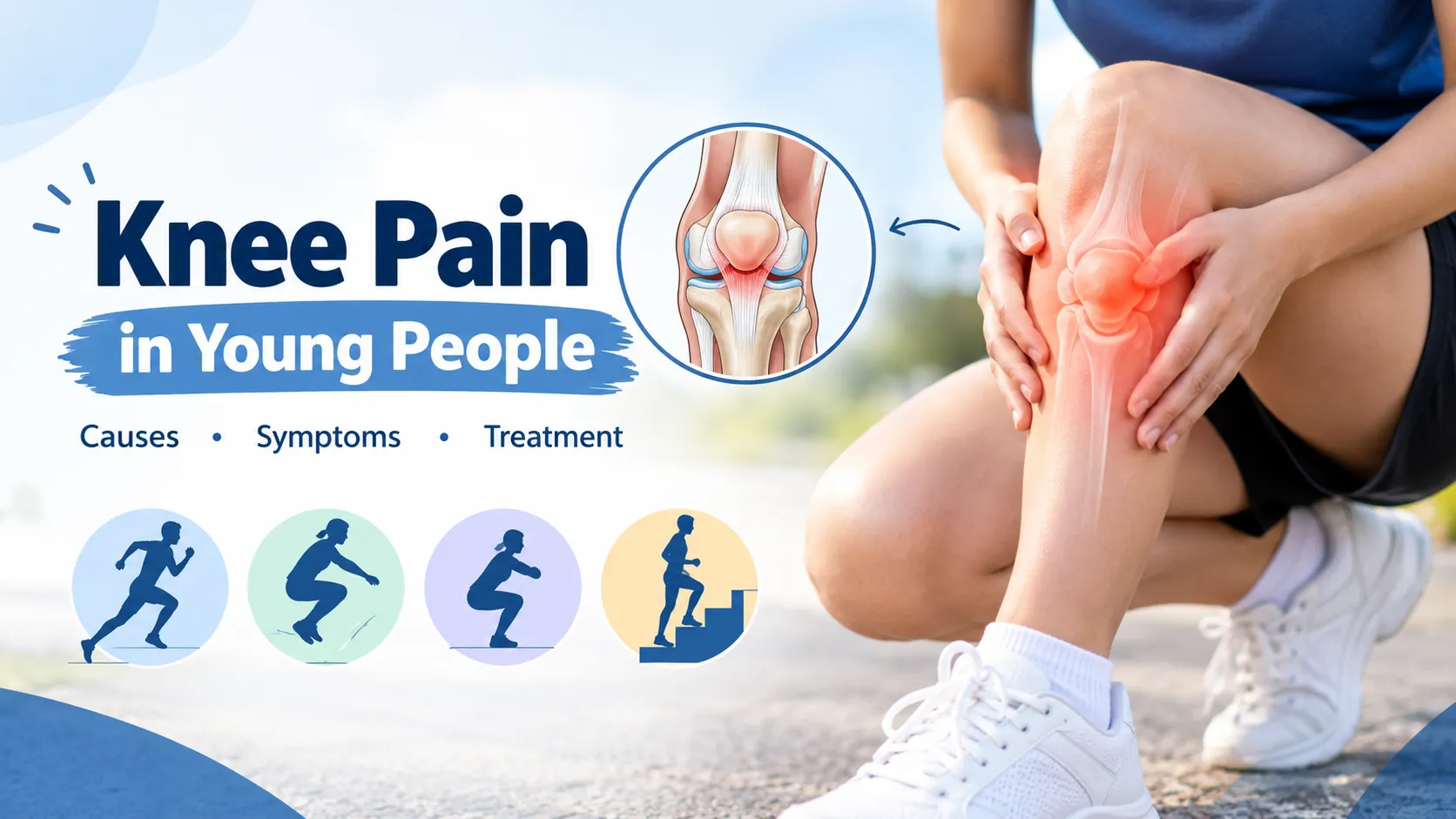
Anterior knee pain is pain around or behind the kneecap, and it is the most common cause of knee pain in teenagers and young adults. It is usually caused by patellofemoral pain syndrome, where the kneecap is overloaded during running, jumping, squatting, and stair climbing. Other causes include Osgood-Schlatter disease, patellar tendinitis, Sinding-Larsen-Johansson syndrome, kneecap instability, and lower-limb alignment problems such as knock knees or bow legs. Symptoms include a dull ache at the front of the knee that worsens with stairs, sitting for long periods, and sports. Diagnosis is clinical, with X-rays or MRI in selected cases. Most young patients recover within six to twelve weeks through activity modification, ice, and physiotherapy focused on quadriceps and hip strengthening. Surgery is rarely needed, except when significant limb malalignment or kneecap instability is present.
Knee pain is one of the most common complaints among teenagers and young adults, especially those who play sports, dance, run, or have recently gone through a growth spurt. In most cases, the pain sits at the front of the knee, around or behind the kneecap. Doctors call this anterior knee pain. Although it can be frustrating and can keep young people away from sport, it is rarely serious and usually improves with the right exercises and activity changes.
What is Anterior Knee Pain?
Anterior knee pain is a broad term for pain felt at the front of the knee. It is not a single disease but a symptom that can come from several structures:
- The patella (kneecap) and the cartilage on its underside
- The patellofemoral joint, where the kneecap glides in a groove on the thigh bone
- The patellar tendon, which connects the kneecap to the shinbone
- The quadriceps tendon, which connects the thigh muscles to the kneecap
- The growth plates around the knee in children and adolescents
The most common cause in young people is patellofemoral pain syndrome (PFPS), sometimes called “runner’s knee.” It is especially common in teenage girls, though boys are frequently affected too.
Anatomy of the Front of the Knee

The knee joint is formed by the femur (thigh bone), the tibia (shinbone), and the patella (kneecap). The kneecap sits inside the quadriceps tendon and glides up and down in a groove at the lower end of the femur, called the trochlear groove, every time the knee bends and straightens.
The kneecap acts like a pulley. It increases the power of the quadriceps muscle when you straighten your leg. During activities such as climbing stairs, squatting, or jumping, the force across the kneecap can reach several times your body weight. If the kneecap does not track smoothly in its groove, or if the surrounding muscles are weak or tight, these forces concentrate on small areas of cartilage and soft tissue and cause pain.
Common Causes of Knee Pain in Young Age

1. Patellofemoral Pain Syndrome
This is the leading cause of knee pain in teenagers and young adults. It results from overload of the patellofemoral joint rather than a specific injury. Contributing factors include:
- Sudden increase in sports or training volume
- Weak quadriceps, especially the inner thigh muscle (vastus medialis)
- Weak hip and gluteal muscles, which allow the knee to collapse inward
- Tight hamstrings, calves, and iliotibial band
- Flat feet or overpronation
- Poor landing and running technique
2. Osgood-Schlatter Disease
This condition affects active children and young teenagers, usually between 10 and 15 years of age, during growth spurts. Repeated pulling of the patellar tendon on the growth plate of the shinbone causes pain and a tender bony bump just below the kneecap. It is common in football, basketball, kabaddi, and athletics.
3. Sinding-Larsen-Johansson Syndrome
Similar to Osgood-Schlatter disease, this affects the lower tip of the kneecap where the patellar tendon attaches. It is seen mainly in active children between 10 and 13 years of age.
4. Patellar Tendinitis (Jumper’s Knee)
Overuse of the patellar tendon in jumping sports such as volleyball, basketball, and high jump causes pain just below the kneecap. It is more common in older teenagers and young adults.
5. Patellar Instability and Maltracking
Some young people have a kneecap that tends to drift to the outer side or even dislocate. Causes include a shallow trochlear groove, loose ligaments, a high-riding kneecap (patella alta), or abnormal limb alignment. Repeated subluxation causes pain, swelling, and a feeling that the knee is giving way.
6. Lower-Limb Malalignment
Alignment of the leg strongly affects how forces pass through the knee. Conditions such as knock knees, bow legs, and rotational twists of the thigh or shin bones change the pull on the kneecap. When these deformities are significant, they can cause persistent anterior knee pain, kneecap instability, and early cartilage wear that does not settle with exercises alone.
7. Other Causes
- Plica syndrome, irritation of a fold of joint lining
- Fat pad impingement under the kneecap
- Osteochondritis dissecans, a condition affecting cartilage and bone in growing knees
- Meniscus or ligament injury after a twisting sports injury
- Referred pain from the hip, such as slipped capital femoral epiphysis in teenagers
Causes at a Glance
| Condition | Typical Age | Pain Location | Key Feature |
|---|---|---|---|
| Patellofemoral pain syndrome | 12 to 30 years | Around or behind kneecap | Worse with stairs, squats, sitting |
| Osgood-Schlatter disease | 10 to 15 years | Below kneecap, on shinbone | Tender bony bump |
| Sinding-Larsen-Johansson | 10 to 13 years | Lower tip of kneecap | Pain with jumping and running |
| Patellar tendinitis | 15 to 30 years | Below kneecap | Common in jumping sports |
| Patellar instability | 10 to 25 years | Front and inner knee | Knee gives way, kneecap slips |
| Limb malalignment | Any age | Front of knee, variable | Knock knees, bow legs, rotation |
Symptoms of Anterior Knee Pain
Young people with anterior knee pain usually describe:
- A dull, aching pain around or behind the kneecap
- Pain while climbing or descending stairs
- Pain when squatting, kneeling, or jumping
- Pain after sitting for long periods with the knees bent, known as the “theatre sign”
- A grinding, clicking, or cracking sensation when bending the knee
- Mild swelling after activity
- Pain in both knees, which is common in patellofemoral pain syndrome
- Occasional feeling of the knee giving way
Warning signs that need prompt medical evaluation include a locked knee, significant swelling, inability to bear weight, night pain, fever, pain after a major injury, or pain that seems to come from the hip.
How Anterior Knee Pain Is Diagnosed
History and Examination
The doctor asks about sports, training changes, growth spurts, previous injuries, and exactly when the pain occurs. The examination includes:
- Inspection of leg alignment while standing and walking
- Checking kneecap position and tracking as the knee bends
- Tenderness around the kneecap, patellar tendon, and shinbone
- Strength testing of the quadriceps, hips, and core
- Flexibility testing of the hamstrings, calves, and iliotibial band
- Examination of the hips and feet, since problems there can cause knee pain
Imaging
Most young people with anterior knee pain do not need scans. Imaging is used when the diagnosis is unclear, or symptoms persist:
- X-rays to check alignment, kneecap position, growth plates, and bony problems
- Full-length standing X-rays when knock knees, bow legs, or limb length difference is suspected
- MRI scan for cartilage, ligament, or meniscus injury, and for osteochondritis dissecans
- CT scan in selected cases of kneecap instability or rotational deformity
Treatment of Knee Pain in Young Age
Most young patients recover well without surgery. Treatment focuses on reducing load on the knee, correcting muscle imbalances, and returning to activity gradually.
Activity Modification
- Temporarily reduce or pause activities that trigger pain, such as running, jumping, and deep squats
- Switch to low-impact exercise such as swimming or cycling with a high seat
- Avoid sitting with the knees bent for long periods, and stretch the legs regularly
- Return to sport gradually once pain settles
Ice and Pain Relief
Ice packs for 15 to 20 minutes after activity reduce pain and swelling. Short courses of simple pain relievers may be used under medical advice. Long-term painkiller use is not a solution, because it hides symptoms without fixing the cause.
Physiotherapy and Strengthening Exercises
Structured physiotherapy is the most effective treatment for anterior knee pain. A good programme usually includes:
- Quadriceps strengthening with straight leg raises, wall sits within a pain-free range, and short-arc knee extensions
- Hip and gluteal strengthening with clamshells, side-lying leg raises, glute bridges, and band walks
- Core stability exercises to improve control of the whole lower limb
- Stretching of the hamstrings, calves, quadriceps, and iliotibial band
- Balance and landing training to correct knee collapse during jumping and running
- Gradual return-to-sport drills under supervision
Most patients notice improvement within four to six weeks, with substantial recovery by six to twelve weeks.
Taping, Braces, and Footwear
- Kneecap taping or patellar stabilising braces can reduce pain during the early phase of rehabilitation
- Supportive sports shoes appropriate for the activity
- Arch supports or orthotics for flat feet and overpronation
Treatment of Specific Conditions
- Osgood-Schlatter and Sinding-Larsen-Johansson usually settle once growth slows. Activity modification, ice, stretching, and a patellar strap help in the meantime.
- Patellar tendinitis responds to load management and progressive tendon-loading exercises.
- Patellar instability is first treated with strengthening and bracing. Recurrent dislocations may need surgical stabilisation.
When Is Surgery Needed?
Surgery is rarely needed for anterior knee pain in young people. It is considered only in specific situations:
- Recurrent kneecap dislocations despite good physiotherapy
- Loose bodies or cartilage injury inside the knee
- Unstable osteochondritis dissecans lesions
- Significant knock knees, bow legs, or rotational deformity causing persistent pain or instability
In growing children, angular deformities such as knock knees and bow legs can often be corrected with minimally invasive guided growth surgery, in which small plates gently redirect growth at the growth plate. In adolescents and young adults who have finished growing, a corrective osteotomy may be needed to realign the limb. These decisions require careful assessment by a surgeon experienced in limb deformity correction.
How to Prevent Knee Pain in Teenagers
- Increase training load gradually rather than suddenly
- Warm up before sports and cool down with stretching afterwards
- Include regular strength training for the thighs, hips, and core
- Learn correct landing, jumping, and running technique
- Wear supportive footwear and replace worn-out sports shoes
- Maintain a healthy body weight
- Take rest days, especially during growth spurts
- Do not ignore persistent knee pain or a knee that gives way
When to See an Orthopedic Surgeon
Most cases of anterior knee pain in teenagers improve with home care and physiotherapy. Consult an orthopedic surgeon if:
- Pain persists beyond six to eight weeks despite rest and exercises
- The knee locks, gives way, or the kneecap slips out of place
- There is significant swelling or inability to bear weight
- Pain began after a significant sports injury
- Visible knock knees, bow legs, or a difference in leg length is present
- Pain wakes the child at night or is associated with fever
Dr. Divya Ahuja, MS Ortho, is a Mumbai-based orthopedic and Ilizarov surgeon with over 15 years of experience in limb alignment, deformity correction, and complex orthopedic care. His practice at the Center for Limb Lengthening and Reconstruction, Mangal Anand Hospital, Chembur, evaluates teenagers and young adults with persistent knee pain, assesses limb alignment with full-length X-rays and software-assisted planning, and offers guided growth or corrective osteotomy when malalignment is the root cause. For a consultation with an experienced orthopedic surgeon in Mumbai, you can book online or visit the clinic at Chembur, Thane, Dadar, Vashi, Navi Mumbai, or Tilak Nagar.
Conclusion
Knee pain in teenagers and young adults is common, but it is rarely serious. Patellofemoral pain syndrome and growth-related conditions account for most cases, and the majority recover with smart activity changes, targeted strengthening, and patience. When pain persists, the knee gives way, or limb alignment looks abnormal, a detailed orthopedic evaluation can identify the root cause and prevent long-term problems. Consult Dr. Divya Ahuja for a thorough assessment of knee pain and limb alignment in young patients and an evidence-based, personalised treatment plan.
Frequently Asked Questions (FAQs)
What causes knee pain at a young age?
The most common cause is patellofemoral pain syndrome, caused by overload of the kneecap joint. Other causes include Osgood-Schlatter disease, patellar tendinitis, kneecap instability, sports injuries, and lower-limb alignment problems such as knock knees or bow legs.
Why do teenage girls get knee pain more often?
Teenage girls often have wider hips, a greater knee inward angle, more flexible ligaments, and relatively weaker hip muscles. These factors increase stress on the kneecap during sports and stairs, making patellofemoral pain syndrome more common in girls than boys.
How can I cure knee pain at a young age?
Most young people recover by reducing painful activities temporarily, applying ice, and following a physiotherapy programme that strengthens the quadriceps, hips, and core and stretches tight muscles. Correct footwear and gradual return to sport help prevent recurrence.
What are the best exercises for knee pain in teenagers?
Useful exercises include straight leg raises, wall sits within a pain-free range, glute bridges, clamshells, side-lying leg raises, and hamstring and calf stretches. A physiotherapist can tailor the programme and progress it safely as symptoms improve.
Should a teenager stop playing sports because of knee pain?
Not permanently. Most teenagers need to reduce or modify sports for a few weeks while pain settles and strength improves. They can usually return gradually. Continuing to play through significant pain often prolongs recovery and may worsen the condition.
Can knock knees or bow legs cause knee pain?
Yes. Knock knees, bow legs, and rotational deformities change how force passes through the knee and kneecap. Significant malalignment can cause persistent front knee pain, kneecap instability, and early cartilage wear, and may need guided growth or corrective surgery.
When does knee pain in a young person need an MRI?
An MRI is needed if pain persists despite treatment, the knee locks or gives way, there is marked swelling, pain followed a significant injury, or a cartilage, meniscus, or ligament problem is suspected. Most anterior knee pain does not need MRI.
How long does anterior knee pain take to heal?
Most young patients improve within four to six weeks of activity modification and physiotherapy, and recover substantially within six to twelve weeks. Growth-related conditions such as Osgood-Schlatter disease may cause intermittent symptoms until growth slows down.
Does knee pain in young age need surgery?
Rarely. Surgery is considered only for recurrent kneecap dislocations, cartilage injuries, loose bodies, unstable osteochondritis dissecans, or significant limb malalignment. The vast majority of teenagers and young adults recover fully with exercises and activity modification.