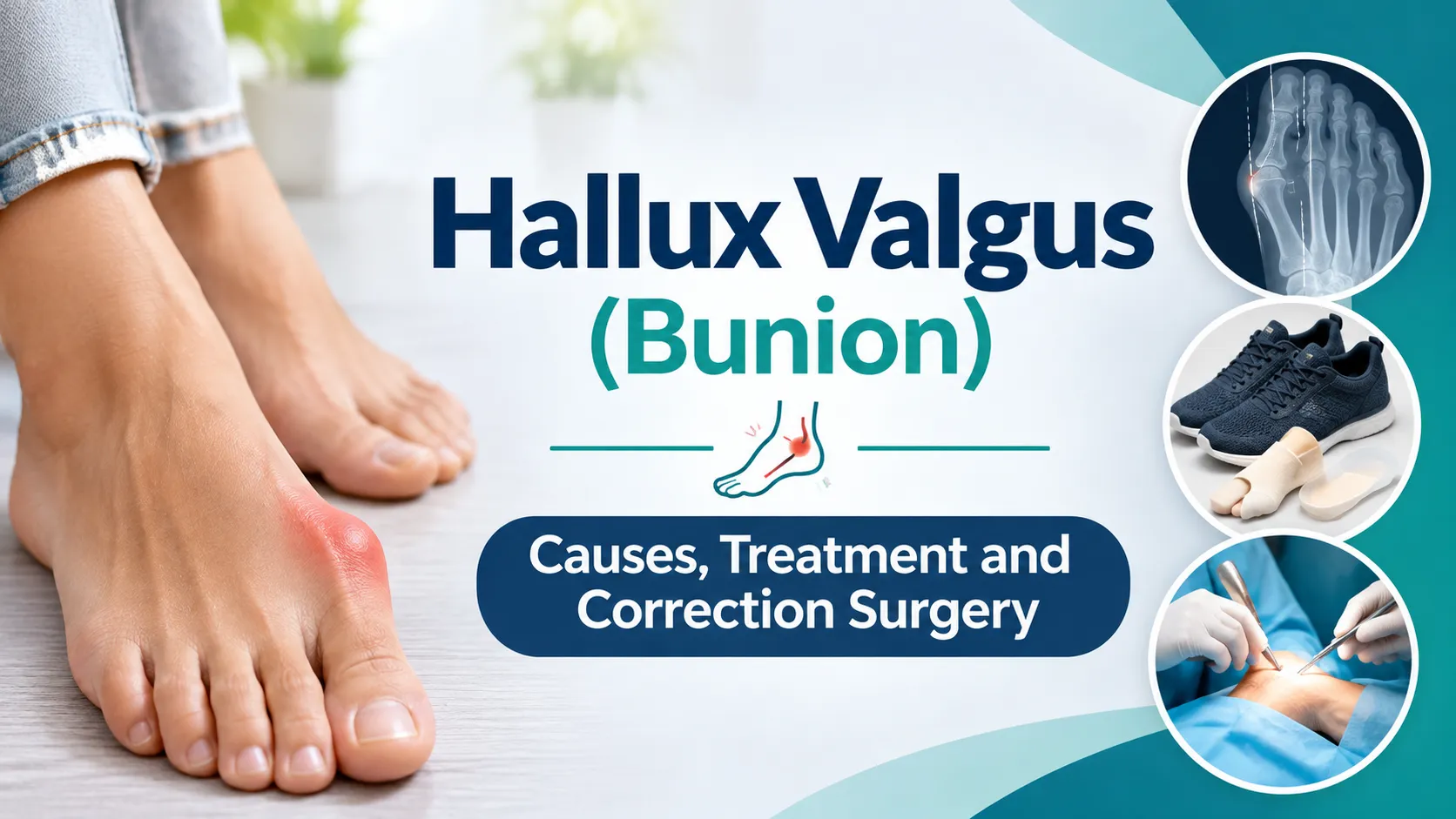
Hallux valgus (bunion) explained: causes, X-ray grades, what helps without surgery, chevron vs scarf vs Lapidus osteotomy, recovery & cost in India.
It often starts as a small bump at the base of the big toe. A few years later, the toe is leaning hard against its neighbours, shoes rub, and walking any distance hurts. That bump is a bunion, and its medical name is hallux valgus.
Bunions are especially common in women between 30 and 60. Some stay mild for life. Others slowly worsen and change the shape of the whole front of the foot. This article explains why bunions form, how doctors grade them on X-ray, which non-surgical options are worth trying, and what bunion treatment through surgery involves, including recovery time and cost in India.
What Is Hallux Valgus (Bunion)?
Hallux valgus is a deformity in which the big toe drifts toward the smaller toes while the first metatarsal bone drifts the other way, creating a bony bump on the inner side of the foot. That bump is the bunion. It is not extra bone growing on the foot. It is mostly the end of the metatarsal bone pushed out of line.
The word hallux means big toe, and valgus describes the outward angle of the toe. As the joint moves out of alignment, the soft tissues around it stretch on one side and tighten on the other, which is why a bunion tends to get worse over time rather than better.
A smaller version can form at the base of the little toe. This is called a bunionette or tailor’s bunion.
What Causes Bunions?
Bunions rarely have one single cause. Usually an inherited foot shape sets the stage, and daily habits push it further.
- Genetics: bunions run strongly in families. Many people inherit a foot type or a loose first metatarsal joint that makes the big toe more likely to drift.
- Footwear: narrow, pointed shoes and high heels squeeze the toes together and shift weight onto the front of the foot. Footwear does not usually cause a bunion on its own, but it can speed it up and make it more painful.
- Flat feet: when the arch collapses, the foot rolls inward and the big toe takes extra pressure, which encourages it to drift. You can read more about flat feet treatment and exercises if this applies to you.
- Arthritis: rheumatoid arthritis and other inflammatory joint conditions can damage the big toe joint and pull it out of line.
- Loose ligaments and nerve conditions: some people have very flexible joints or a neurological condition that changes the muscle balance in the foot.
Symptoms and Grades of Hallux Valgus
Common bunion symptoms include:
- A visible bump on the inner side of the big toe joint
- Redness, swelling or a burning feeling over the bump
- Pain when wearing closed or narrow shoes
- The big toe pressing on or crossing over the second toe
- Corns and calluses between the toes or under the ball of the foot
- Pain under the second toe (transfer metatarsalgia)
- Stiffness of the big toe joint in later stages
Doctors grade hallux valgus using two angles measured on a standing X-ray:
- Hallux valgus angle (HVA): how far the big toe leans toward the other toes
- Intermetatarsal angle (IMA): how wide the gap is between the first and second metatarsal bones
| Grade | HVA (big toe angle) | IMA (gap between metatarsals) | What it usually looks and feels like |
|---|---|---|---|
| Normal | Less than 15 degrees | Less than 9 degrees | Straight big toe, no bump |
| Mild | 15 to 20 degrees | 9 to 11 degrees | Small bump, pain mainly in tight shoes |
| Moderate | 20 to 40 degrees | 11 to 16 degrees | Clear bump, toe pressing on the second toe, regular pain |
| Severe | More than 40 degrees | More than 16 degrees | Big toe overlapping or under the second toe, wide foot, pain in most shoes |
The grade is not the only thing that matters. A mild bunion can hurt a lot, and some severe ones cause surprisingly little pain. Treatment is based on symptoms first and angles second.
Diagnosis: Bunion X-Ray Angles Explained
A bunion is easy to see, but an X-ray is needed to plan treatment properly. The X-ray should be taken while you are standing, because the deformity looks different with body weight on the foot.
On the X-ray, your surgeon will check:
- The HVA and IMA, which decide the grade
- Whether the sesamoid bones under the big toe joint have shifted out of position
- Whether the first metatarsal is rotated, which affects the choice of surgery
- Signs of arthritis in the big toe joint
- Instability at the joint where the first metatarsal meets the midfoot
For a complex or recurrent bunion, or when the whole foot shape is involved, a broader foot deformity correction plan may be needed rather than treating the big toe alone.
Non-Surgical Bunion Treatment: What Works and What Doesn’t
Non-surgical bunion treatment can ease pain and slow progression, but it cannot straighten the bones once the deformity has formed. That is the honest summary. For many people with mild or moderate bunions, though, comfort is all they need.
What Usually Helps
- Wider, deeper shoes: a roomy toe box with soft uppers is the single most useful change. Sports shoes and sandals with straps that avoid the bump often feel best.
- Lower heels: keeping heels under about 4 cm reduces pressure on the front of the foot.
- Bunion pads and gel sleeves: they cushion the bump and reduce rubbing inside shoes.
- Arch-support insoles: helpful when flat feet are adding to the problem.
- Toe spacers: soft silicone spacers between the first and second toes can ease rubbing and feel comfortable, especially in sandals.
- Ice and short courses of pain relief: for flare-ups after a long day on your feet, under medical advice.
- Stretching and strengthening: gentle big toe stretches and exercises for the small foot muscles can help with stiffness.
What Doesn’t Work the Way It’s Sold
- Bunion correctors and night splints: these hold the toe straighter while worn and may relieve aches, but there is no reliable evidence that they permanently realign the bones. The toe returns to its original position once the splint comes off.
- Creams and oils: they may soothe the skin, but they do not change the joint.
- Ignoring painful shoes: wearing tight footwear through pain tends to make the deformity and the callus worse.
When to Consider Surgery
Surgery is worth discussing when:
- Pain limits walking or daily activities despite proper footwear
- You cannot find shoes that fit comfortably
- The big toe is pushing into or crossing the second toe
- Pain under the ball of the foot or corns keep coming back
- The deformity is worsening on repeated X-rays
Surgery is not advised purely for appearance in a bunion that causes no pain.
Bunion Correction Surgery: Types of Osteotomy
Modern bunion surgery does not just shave off the bump. Shaving alone usually leads to the bunion coming back. Instead, the surgeon performs an osteotomy, a controlled cut in the bone, to move the first metatarsal back into line. The soft tissues around the joint are then balanced. Small screws or plates hold the bone while it heals. [Editor: link “osteotomy” to the Nov #7 osteotomy post once it is live.]
| Procedure | Where the bone is cut | Best suited for | Key points |
|---|---|---|---|
| Chevron osteotomy | Near the head of the first metatarsal, close to the big toe joint | Mild to moderate bunions | V-shaped cut; stable; quicker recovery |
| Scarf osteotomy | Along the shaft of the first metatarsal | Moderate to some severe bunions | Z-shaped cut; allows larger correction and rotation |
| Lapidus procedure | Fusion of the joint where the first metatarsal meets the midfoot | Severe bunions, loose or unstable first ray, recurrent bunions | Corrects at the root; longer non-weight-bearing time |
| Akin osteotomy | Base of the big toe bone itself | Added to the above to fine-tune toe alignment | Small wedge removed from the toe |
| Big toe joint fusion | The big toe joint (first MTP joint) | Bunion with significant arthritis or failed earlier surgery | Removes pain from arthritis; joint no longer bends |
Some centres also offer minimally invasive bunion surgery through tiny incisions using a burr. It can suit selected patients, but it is not right for every foot. The procedure should match your X-ray, not the other way around.
Recovery Timeline After Bunion Surgery
Recovery varies with the procedure. A typical course after a chevron or scarf osteotomy looks like this:
- Day 0 to 2: usually a day-care or short stay. You walk with a special flat post-operative shoe that keeps weight on the heel. Keep the foot raised as much as possible.
- Weeks 1 to 2: dressing check and stitch removal. Swelling is at its worst.
- Weeks 2 to 6: continue in the post-operative shoe. Short walks at home. Start gentle toe movement if advised.
- Weeks 6 to 8: X-ray to check healing. Move into a wide, comfortable trainer.
- Months 3 to 4: most people are back to work, driving and normal walking.
- Months 6 to 12: remaining swelling settles; most can return to sport and a wider range of shoes.
After a Lapidus procedure, you may need to keep weight off the foot for several weeks, so recovery is longer.
Possible complications include stiffness, swelling that lasts several months, infection, delayed bone healing, numbness near the scar, and recurrence. Following instructions about weight bearing and footwear lowers these risks.
Bunion Surgery Cost in India
There is no fixed price, and anyone quoting one without seeing your X-ray is guessing. As a broad indication, private hospital costs for bunion surgery in India are commonly quoted in the range of about ₹40,000 to ₹1,50,000 per foot.
The final cost depends on:
- The type of procedure (a chevron is usually simpler than a Lapidus or fusion)
- One foot or both feet operated together
- Implants used, such as screws or plates
- Type of anaesthesia and length of hospital stay
- Hospital category and city
- Pre-operative tests and post-operative physiotherapy
Many health insurance policies cover bunion surgery when it is medically needed for pain or deformity. Check with your insurer before booking. A clear cost estimate can only be given after a clinical examination and standing X-rays.
Frequently Asked Questions About Bunions
Can bunions be corrected without surgery?
No treatment without surgery can permanently straighten the bones of a bunion. Wider shoes, pads, spacers and insoles can reduce pain and may slow progression, which is often enough for people with mild symptoms.
Do bunion correctors work?
Bunion correctors and night splints can ease discomfort while you wear them. However, they do not permanently realign the bones. Once the splint is removed, the big toe gradually returns to its earlier position.
How long after bunion surgery can I walk?
Most patients walk on the heel in a special post-operative shoe from the day of surgery or the next day. Normal walking in a comfortable trainer usually begins around six to eight weeks, depending on the procedure.
Will a bunion come back after surgery?
Recurrence is possible but uncommon when the right osteotomy is chosen for the deformity and post-operative advice is followed. The risk is higher if only the bump is shaved without correcting the underlying bone alignment.
Is hallux valgus hereditary?
s hallux valgus hereditary?
Yes, bunions often run in families. People inherit foot shapes and joint looseness that make the big toe more likely to drift. Footwear and flat feet then add to the problem over the years.
Which doctor treats bunions?
An orthopaedic surgeon with experience in foot and ankle or deformity correction treats bunions. They assess your standing X-rays, grade the deformity and recommend either non-surgical care or the most suitable osteotomy.
Can both feet be operated together?
Sometimes, yes. Operating on both feet together means one recovery period, but walking is harder for the first few weeks. Many surgeons prefer one foot at a time, especially for larger corrections or older patients.
Is bunion surgery painful?
Modern anaesthesia, nerve blocks and pain medicines keep pain well controlled. Most discomfort is in the first one to two weeks and eases steadily. Keeping the foot raised reduces both swelling and pain.
Can I wear heels after bunion surgery?
Most people return to a wider range of shoes after six months. Low heels may be possible later, but very narrow, high heels are best avoided long term because they increase the chance of problems returning.
What is the difference between a bunion and gout?
A bunion is a structural deformity that develops slowly. Gout causes sudden attacks of intense pain, redness and swelling in the big toe joint due to uric acid crystals. A doctor can tell them apart with examination and tests.