
Shin splints, medically known as medial tibial stress syndrome, are a common overuse injury that causes dull, aching pain along the inner or front side of the shinbone. They usually occur in runners, dancers, and beginners who suddenly increase their activity level, run on hard surfaces, wear worn-out shoes, or have flat feet, high arches, or lower-limb alignment problems such as bow legs and knock knees. Symptoms include diffuse tenderness along the tibia, mild swelling, and pain that worsens with exercise. Diagnosis is clinical, and MRI is used to rule out a stress fracture. Most cases heal within two to six weeks with rest, ice, physiotherapy, calf and foot strengthening, supportive footwear, and gradual return to activity. Surgery is very rarely needed. Persistent, sharp, or pinpoint shin pain requires orthopedic evaluation to rule out a tibial stress fracture and address underlying alignment issues.
What Are Shin Splints?
Shin splints refer to pain along the shinbone (tibia) caused by inflammation of the muscles, tendons, and periosteum (the outer layer of bone) in the lower leg. The condition is an overuse injury rather than a single traumatic event. It typically develops when the demands placed on the shin outpace the tissue’s ability to recover.
Shin splints are especially common among:
- Runners increasing their distance or speed too quickly
- Dancers, particularly in classical and jazz forms
- Military recruits and cadets during initial training
- Basketball, football, and tennis players
- People who switch to running or brisk walking on hard surfaces
- Individuals with flat feet, high arches, or poor lower-limb alignment
Anatomy of the Shin
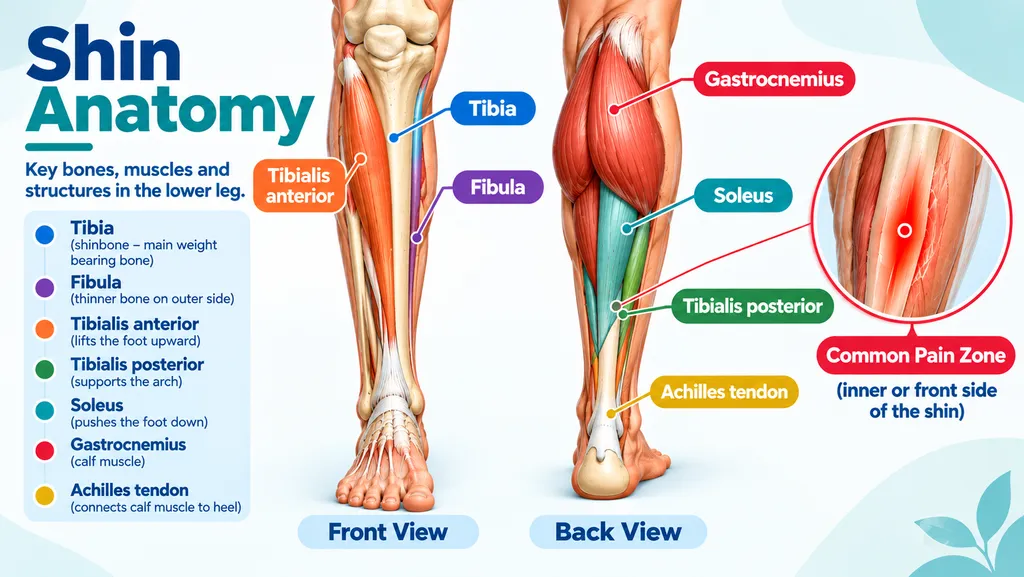
The shin refers to the front area of the lower leg between the knee and ankle. It contains two bones: the tibia (shinbone), which carries most of the body’s weight, and the fibula, a thinner bone on the outer side.
Several muscles attach to the tibia and drive the motion of the foot and ankle:
- Tibialis anterior at the front, which lifts the foot upward
- Tibialis posterior at the back, which supports the arch of the foot
- Soleus and gastrocnemius, the calf muscles, which push the foot down
- Peroneal muscles on the outer side of the leg
Repeated stress on these muscles and their attachments to the tibia is what causes the classic pain of shin splints.
Types of Shin Splints

Shin splints are broadly grouped by where the pain occurs and which structures are irritated.
Medial (Posterior) Shin Splints
This is the most common form. Pain runs along the inner edge of the shinbone, in the lower two-thirds of the tibia. It usually involves the tibialis posterior and soleus muscles and their attachments. Runners and dancers with flat feet or overpronation are particularly prone to this pattern.
Anterior Shin Splints
Pain in this pattern is felt on the front and outer aspect of the shin. It involves the tibialis anterior muscle, which lifts the foot with every step. Athletes new to running downhill or on hard surfaces often develop anterior shin splints, especially when calf muscles are tight.
Causes of Shin Splints
Shin splints are caused by repeated impact and overload on the shinbone and its soft-tissue attachments. Common triggers include:
- Rapid increase in running distance, speed, or intensity
- Sudden switch to a harder or uneven surface
- Downhill running or long stair climbing
- Insufficient warm-up before exercise
- Poor running form and inefficient gait
- Old, worn-out, or unsupportive shoes
- Weak core, hip, and calf muscles
- Tight calves and Achilles tendons
- Flat feet, high arches, or overpronation
- Malalignment of the lower limb, such as bow legs or knock knees
- Excess body weight and rapid weight gain
Risk Factors
Certain factors significantly raise the risk of developing shin splints:
- Being a beginner runner or resuming activity after a long break
- Female sex, especially with low bone density
- Previous history of shin splints or stress fractures
- Vitamin D or calcium deficiency
- Menstrual irregularities in female athletes
- Adolescents in rapid growth phases
- People with anatomical foot problems such as pes planus or pes cavus
- Anyone with structural leg length discrepancy or angular deformity
- Sedentary individuals who abruptly begin high-impact routines
Symptoms of Shin Splints
Shin splints usually develop gradually. Symptoms include:
- Dull, aching pain along the inner or front side of the shin
- Tenderness on pressing along a diffuse area of the tibia
- Mild swelling of the lower leg
- Pain that starts during exercise, sometimes improves as you warm up, and returns worse the next morning
- Pain that eases with rest in the early stages
- Progression to constant pain that persists at rest in untreated cases
Warning signs that suggest a stress fracture rather than simple shin splints include sharp, pinpoint tenderness on a small area of bone, pain that worsens with each session, and pain that continues even at rest.
Shin Splints vs Stress Fracture vs Compartment Syndrome
Not every shin pain is shin splints. It is important to distinguish it from more serious conditions.
| Condition | Pain Pattern | Tenderness | Response to Rest |
|---|---|---|---|
| Shin splints | Diffuse ache along inner shin | Broad area, mild | Improves in days to weeks |
| Tibial stress fracture | Sharp, focal pain | Pinpoint tenderness on bone | Slow to improve, may persist |
| Exertional compartment syndrome | Tight, bursting pain during activity | Muscle compartments tense | Improves quickly at rest, recurs on next run |
| Deep vein thrombosis | Constant calf pain, swelling | Warm, red, tender calf | Does not improve, may worsen |
Any pinpoint tenderness on bone or severe activity-related pain needs prompt orthopedic evaluation to rule out a stress fracture that could progress to a complex fracture if ignored.
How Shin Splints Are Diagnosed
Diagnosis is largely clinical. The doctor takes a detailed history of training patterns, footwear, surfaces, and previous injuries, then examines the shin for tenderness, swelling, and pain on resisted foot movement.
Imaging is used mainly to rule out other conditions:
- X-rays are usually normal in shin splints but can reveal stress fractures in advanced cases
- MRI scan is the most sensitive test. It shows early bone marrow edema, periosteal reaction, and confirms stress fracture when present
- Bone scan is occasionally used
- Doppler ultrasound may be ordered if deep vein thrombosis is suspected
Blood tests for vitamin D, calcium, and thyroid function are considered in athletes with recurrent shin pain or a history of low bone density.
Treatment of Shin Splints
Most cases resolve completely with structured, patient-centered conservative care over four to eight weeks.
RICE and Rest
The first step is to reduce load on the shin:
- Rest from running, jumping, and other high-impact activities
- Ice for 15 to 20 minutes several times a day
- Compression with a stretch bandage or calf sleeve
- Elevation of the leg when resting
- Cross-training with swimming, cycling, or elliptical work to maintain fitness without loading the shin
Physiotherapy and Exercises
Structured physiotherapy is the single most important part of recovery. A programme typically includes:
- Calf stretches, especially for the gastrocnemius and soleus
- Foot arch and intrinsic muscle strengthening
- Hip and core strengthening to correct gait
- Progressive eccentric loading of the tibialis anterior and posterior
- Balance and proprioception drills
- Gait retraining with reduced stride length and increased cadence
Footwear and Orthotics
Correct footwear plays a major role in preventing recurrence:
- Well-cushioned running shoes appropriate for your foot type
- Replacement of running shoes every 600 to 800 kilometres
- Custom or off-the-shelf orthotics for flat feet or overpronation
- Medial arch supports for medial tibial stress syndrome
- Motion-control shoes for severe overpronation
Medications
Short courses of NSAIDs help ease pain and inflammation. Vitamin D and calcium supplementation is added in patients with proven deficiency, which is common in Indian athletes despite our sunlight.
When Shin Splints Need Surgery
Surgery is very rarely needed for shin splints. It is considered only in a small number of chronic cases that have failed at least six to twelve months of thorough conservative treatment. Options include periosteal release or fasciotomy if chronic exertional compartment syndrome is confirmed. In athletes with progression to a complete tibial stress fracture, orthopedic fixation may be needed to allow safe healing and return to sport. These decisions must be made by an experienced orthopedic surgeon after careful evaluation and appropriate imaging.
Preventing Shin Splints
Prevention is far easier than treatment. Athletes and active adults can significantly reduce their risk with a few habits:
- Follow the 10 percent rule, increasing running distance or intensity by no more than 10 percent per week
- Warm up properly before any high-impact session
- Include strength and mobility work for the calves, hips, and core
- Run on softer surfaces such as grass or synthetic tracks when possible
- Avoid sudden switches to hilly or hard terrain
- Wear supportive, well-fitting shoes and replace them regularly
- Correct flat feet, cavus feet, or foot deformity with the right orthotics or, in structural cases, surgical planning
- Maintain adequate calcium, vitamin D, and overall nutrition
- Address underlying malalignment such as bow legs or knock knees that shift stress onto the shin
When to See an Orthopedic Surgeon
You should see an orthopedic surgeon if shin pain does not improve after two to three weeks of rest and self-care, becomes sharp and pinpoint on a small area of bone, wakes you at night, or is severe enough to prevent walking. These features suggest a stress fracture or another underlying problem that needs proper investigation.
Dr. Divya Ahuja, MS Ortho, is a Mumbai-based orthopedic and Ilizarov surgeon with over 15 years of experience in musculoskeletal care, deformity correction, and complex trauma. His practice at the Center for Limb Lengthening and Reconstruction, Mangal Anand Hospital, Chembur, is well-suited to evaluate persistent shin pain, rule out a stress fracture, and address underlying alignment problems such as bow leg, knock knee, and foot deformity that contribute to recurrent shin splints. For a consultation with an experienced orthopedic surgeon in Mumbai, you can book online or visit the clinic at Chembur, Thane, Dadar, Vashi, Navi Mumbai, or Tilak Nagar.
Conclusion
Shin splints are a very common but very manageable overuse injury. With early recognition, structured rest, targeted physiotherapy, supportive footwear, and gradual return to activity, most runners and athletes recover completely and go back to their sport. When shin pain becomes sharp, focal, or persistent, or when repeated episodes point to an underlying alignment problem, an experienced orthopedic evaluation is essential. Consult Dr. Divya Ahuja for a detailed assessment, appropriate imaging, and a personalised treatment plan that gets you back to pain-free activity.
Frequently Asked Questions (FAQs)
What are shin splints?
Shin splints, medically called medial tibial stress syndrome, are an overuse injury that causes pain along the inner or front side of the shinbone. Repeated impact irritates muscles, tendons, and the outer layer of bone, producing a diffuse ache during and after activity.
What causes shin splints?
Shin splints are caused by sudden increases in running distance or intensity, hard training surfaces, poor footwear, weak calves and hips, flat feet, and lower-limb malalignment such as bow legs or knock knees that shift stress onto the shinbone.
How do I know if I have shin splints or a stress fracture?
Shin splints produce diffuse tenderness along a broad area of the shin and settle with rest. Stress fractures produce sharp, pinpoint pain on a small spot of bone that worsens with each session and often persists at rest. MRI confirms the diagnosis.
How long do shin splints take to heal?
Most cases of shin splints improve within two to six weeks of rest, physiotherapy, footwear correction, and cross-training. Severe or long-standing cases may take two to three months. Ignoring symptoms often lengthens recovery and risks progression to a stress fracture.
Can I run with shin splints?
Continuing to run through shin pain usually worsens the condition and delays healing. It is better to switch temporarily to low-impact activities such as swimming or cycling, follow a structured rehabilitation plan, and return gradually only once symptoms have fully settled.
What is the best treatment for shin splints?
The best treatment combines rest from impact activity, RICE therapy, calf and foot strengthening, gait retraining, supportive footwear, and orthotics if needed. NSAIDs help short-term pain, and vitamin D or calcium supplementation is added when deficiency is present.
Do orthotics really help shin splints?
Yes. Orthotics, arch supports, and motion-control shoes reduce excessive pronation and improve shock absorption, which lowers stress on the shin. They are particularly helpful for runners with flat feet, high arches, or a history of recurrent medial tibial stress syndrome.
Are shin splints dangerous?
Shin splints are not dangerous in early stages and respond well to conservative treatment. However, if ignored and repeatedly stressed, they can progress to a tibial stress fracture, which is a more serious injury needing longer rest and, occasionally, surgical fixation.
Can bow legs or knock knees cause shin splints?
Yes. Angular deformities such as bow legs and knock knees change how force passes through the shinbone during running and walking. This uneven loading raises the risk of shin splints, stress fractures, and early knee arthritis if left uncorrected.
When should I see a doctor for shin pain?
See an orthopedic surgeon if shin pain persists beyond two to three weeks despite rest and self-care, becomes sharp and focal, wakes you at night, or prevents normal walking. Early evaluation prevents progression to a full tibial stress fracture.